
Paid Hairdressing Courses: Building Careers in the U.S. Beauty Industry
✨ Government Support | Paid Training | Career Advancement ✨
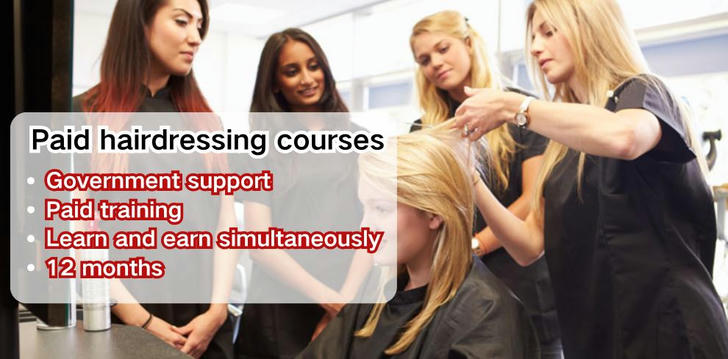
In the United States, government-supported hairdressing training programs are providing a pathway for motivated individuals to gain practical skills, earn income during training—apprentices can earn between $12 and $14 per hour—During their training period, while experienced professionals often increase their earnings through tips, commissions, and independent work.
Why Choose These Programs?
🔹 Hands-On Skill Training
Master cutting, coloring, styling, scalp care, and customer service—blending creativity with business fundamentals for real-world readiness.
🔹 Multiple Career Paths
Work in salons, barbershops, or spas—or launch your own business. Options to specialize in cosmetology, esthetics, or nail technology.
Key Advantages
✅ Earn While You Learn
Paid apprenticeships at partner salons provide on-the-job training at $12–$14/hour—making education financially sustainable.
✅ State License in ~12 Months
Complete training and pass the state exam to earn a recognized license required for legal employment nationwide.
✅ Flexible Schedules
Evening, weekend, and hybrid formats accommodate working adults and caregivers.
✅ Job Placement Support
Programs connect graduates directly with salons and beauty businesses for faster employment.
Program Snapshot
| Component | Details |
|---|---|
| Duration | ~12 months |
| Core Skills | Cutting, coloring, styling, chemical treatments, scalp health, makeup, salon operations |
| Training Model | Classroom instruction + paid salon internships under professional supervision |
Typical Job Responsibilities
Upon licensure, hairdressers and cosmetologists perform a wide range of beauty services, including:
- Analyzing clients' hair condition and recommending suitable treatments
- Applying bleach, dye, or tint using brushes and applicators
- Shampooing, rinsing, and massaging the scalp; applying conditioners as needed
- Cutting, trimming, tapering, and styling hair with scissors, clippers, razors, and blow dryers
- Recommending hairstyles based on clients' features, preferences, and current trends
- Setting hair using blow-drying, natural sets, chemical treatments, pressing irons, or combs
- Suggesting complementary cosmetics and skincare options
- Performing additional services: facial massages, eyebrow shaping, hair removal, and hair straightening or curling
- Cleaning, shaping, and polishing fingernails and toenails (in full-service settings)
Benefits by Age Group
| Age Group | Key Benefits |
|---|---|
| 16–21 | Start earning early ($12–$14/hour); build skills before or during college; low-barrier entry to a stable trade career |
| 22–35 | Launch or pivot into a creative, in-demand profession; flexible scheduling supports family planning and side hustles |
| 36–50 | Career changers receive financial aid for tuition/tools; leverage life experience for client rapport and business ownership |
| 51–65 | Supplement income pre-retirement; maintain social engagement; transition to part-time or mobile salon work |
| 65+ | Stay active with low-physical-impact work; earn supplemental income; build community through client relationships |
5 Steps to Enroll
Check Eligibility
Enroll at 16+; take the licensing exam at 18+.Choose a Program
Select an accredited community college, vocational school, or state-approved training center.Prepare Documents
ID, high school diploma/GED, and program-specific requirements.Apply for Funding
Grants may cover tuition, tools, transport, and living costs. Veterans may qualify for VA benefits.Train & Get Licensed
Complete coursework and practical hours, then pass the state licensing exam.
Conclusion
Government-supported hairdressing programs turn career training into an accessible, paid opportunity. With $12–$14/hour wages during training, a state license in ~12 months, and strong job placement support, they offer a practical path to stability and growth in the U.S. beauty industry—no matter your age or background.