
Fast CNA Certification in 2 Weeks: What You Need to Know (2026 Guide)
Yes--accelerated 2-week CNA programs do exist, but they're not fully online. In most U.S. states, including California and Texas, Certified Nursing Assistant (CNA) training requires both online theory and in-person clinical hours. These hybrid programs let you complete state-mandated coursework quickly-- often in 11--14 days of full-time study --so you can sit for your certification exam and start working faster.
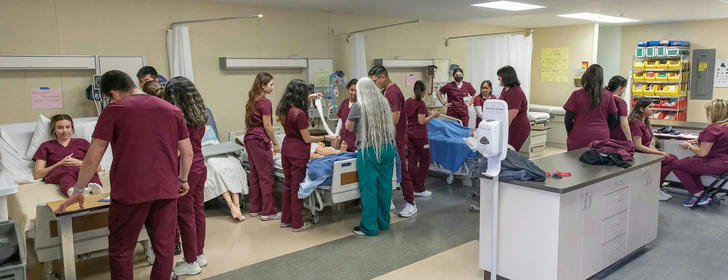
According to the U.S. Bureau of Labor Statistics, over 216,000 CNA job openings are expected annually through 2033, driven by aging populations and long-term care demand. For career changers, students, or those seeking stable entry-level healthcare work, a fast-track CNA path can be practical--if you choose a state-approved program.
How Do 2-Week CNA Programs Work?
State regulations typically require:
- 60--75 hours of classroom/theory instruction (often online)
- 100+ hours of supervised clinical practice (in person)
In an accelerated format, this is delivered full-time (8--10 hours/day) over ~2 weeks. Part-time or evening options usually take 3--6 weeks.
⚠️ Important: Only programs approved by your state's nursing board qualify you for the official CNA exam. Always verify approval before enrolling.
Real 2-Week CNA Programs (Verified Examples)
Below are three state-approved hybrid programs cited by EduMed that offer fast-track options:
| School | Duration | Format | Cost | Key Details |
|---|---|---|---|---|
| Atlanta Career Institute (GA) | 2 weeks | Hybrid | $850 | 85 total hours; 3 full-time schedules (M/W/F, T/Th, or Sat); includes 22 core skill labs |
| Heart to Heart Healthcare Training (TX) | 3 weeks | Hybrid | $950 | 100 contact hours; Texas NATCEP-approved; offers payment plans |
| Legacy Career Institute (TX) | 2–6 weeks | Hybrid | $950 | 14-day intensive OR weekend-only (6 weekends); includes 4 days of in-person skills training |
Source: EduMed – 2-Week CNA Classes Online
These programs include CPR certification, TB testing, background checks, and hands-on clinicals--meeting all prerequisites for state licensure.
Who Is a 2-Week CNA Program Right For?
✅ Ideal if you:
- Can pause other commitments for 2 weeks
- Need quick employment (e.g., due to financial pressure)
- Want hands-on healthcare experience before pursuing LPN/RN
- Are disciplined with self-paced online learning
❌ Not ideal if you:
- Work full-time without schedule flexibility
- Struggle with high-intensity learning
- Prefer gradual skill mastery
Step-by-Step: From Enrollment to Certification
- Choose a state-approved program in the state where you plan to work
- Submit documents: ID, high school diploma/GED, immunization records, TB test
- Complete online theory (typically 1 week)
- Attend in-person clinicals (1–2 weeks at a clinic or nursing home)
- Register for your state's CNA exam (written + skills test)
- Pass the exam → get listed on your state's Nurse Aide Registry
- Start working--in some states (like CA), you can work as a "trainee" for up to 120 days while awaiting results
Common Questions (FAQ)
❓Do 2-week CNA courses provide certification?
Yes. Once online and clinical training are completed, you’re eligible for state certification exams.Once you’re certified, you’ll be ready to apply for jobs in your state.
❓Are there two-week online CNA classes that won’t cost much out of pocket?
Most two-week CNA programs have a fee, but some healthcare employers will pay for your training when you agree to work with them after graduation. Schools like Soaring CNA also offer tuition help for students paying on their own, so your upfront cost could be very low.
❓ Do I need a high school diploma?
Most schools require it, but some "no-GED" programs accept students aged 16+ with parental consent. Check your state's rules.
❓ Can I work before passing the exam?
In California, Texas, and several other states, yes--you may work as a nurse assistant trainee for up to 4 months while preparing for the exam.
❓ What's the average CNA salary?
- Hourly: $21–$26
- Annual: $45,000–$53,000
(Source: U.S. BLS, 2025 data)
Pros and Cons of Accelerated CNA Training
| Pros | Cons |
|---|---|
| ✅ Finish in 2 weeks vs. 2–3 months | ❌ High daily time commitment (8–10 hrs) |
| ✅ Lower cost (most under $1,000) | ❌ Less time to practice skills before exam |
| ✅ Flexible formats (day/evening/weekend) | ❌ Requires strong self-discipline for online learning |
| ✅ Direct path to in-demand jobs | ❌ Not available in all states |
Tip: If 2 weeks feels too intense, consider a 4-week hybrid program--still fast, but more manageable.
How to Apply
1.Find and enroll in a state-approved CNA program that leads to certification—apply online and choose your preferred schedule.
2.Prepare required documents, such as ID, high school diploma or equivalent, and health screening results.
3.Complete the course, pass the state exam, and become a certified nursing assistant (CNA).
Final Advice: Prioritize Compliance Over Speed
While “2-week CNA” sounds appealing, certification only matters if your program is state-approved. Avoid schools that promise “100% online” CNA credentials—these do not meet licensing requirements.
Before enrolling:
Confirm the school is listed on your state health department’s approved CNA program list Ask about exam pass rates and job placement support Verify whether clinical hours are guaranteed (some schools require you to find your own site) 🔍 Ready to Compare Programs? Use your state’s official CNA registry or education portal to find approved training providers near you. Many offer virtual info sessions—ideal for verifying legitimacy before paying tuition.